
Not necessarily, the energy density of the meal is lesser, however the volume of certain foods doesn’t always need to decrease to meet energy needs (DS, PA et al. 2005). Foods such as fruits and vegetables that are naturally lower in calories can be eaten in higher volumes whilst still meeting low energy targets
The truth is any type of food eaten in excess will cause weight gain (B, A et al. 2007), carbohydrates don’t need to be removed from diets to lose weight. Carbohydrates are an essential component of creating a well-balanced diet and restricting this entire food group can often do more harm than good. Low-carbohydrate diets often create risk for low fibre intakes, low nutrient intakes and in turn, many people consequently have higher fat intakes which can result in elevated intakes in saturated fat and other risks (Sacks, Bray et al. 2009).
Removing food groups or creating restrictions around certain foods or eating patterns can result in a poor relationship with food and body image. It’s important to consult with a trusted health professional before considering dietary changes.
Some meal services include all three main meal options including snacks. However, it isn’t uncommon for some providers to narrow the selection down to just ‘main meals’. Regardless of if there is a specified lunch or dinner option, the energy or calorie breakdown is usually the same.
Protein is an essential nutrient that the body requires for lots of functions from cell growth and repair, balancing hormones such as our hunger hormone ghrelin, it can assist in reducing muscle loss (and maintaining muscle) and so many more benefits! Protein is an important component of any meal, however, whilst losing weight or trying to maintain weight loss it is important to eat an adequate amount of protein throughout meals to regulate appetite and satiety between meals (Sacks, Bray et al. 2009).
Protein requirements are dependent on individual factors such as activity levels, age, gender, weight, health status etc. Most companies catering pre-prepared meal plans will include protein portions of at least 25-30g per meal, which is an adequate serve to meet recommendations whilst creating satiety between meals (HJ, PM et al. 2015).
To achieve weight loss, an energy deficit needs to be created (B, A et al. 2007). According to the CSIRO, for safe and effective weight loss, a deficit between 480 – 960 calories per day is recommended (CSIRO, Australia, 2023). It’s important to work with a trusted professional when planning to change dietary patterns and behaviours, book a consultation with a dietitian or nutritionist before making changes.
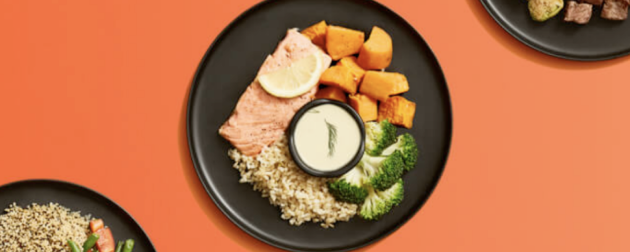
Hellofresh meal kit has introduced their Calorie Smart option which offers a health-conscious or goal-orientated menu. Each recipe under the Calorie Smart menu serves under 650 calories per serving (including low carbohydrate options) and plan sizes are available to include a 2-person and 4-person box with 3-5 recipes.
A vegan or vegetarian diet can support weight loss if well planned. These diets often focus on plant-based foods, which are typically higher in fibre and lower in calories compared to animal products. Vegetables, whole grains, legumes, and fruits are naturally low in fat and calorie-dense, meaning you can eat larger portions while consuming fewer calories. Before making any changes to your diet, book a consultation with a dietitian or nutritionist.
Adela Hruby, P., MPH, JoAnn E. Manson, MD, DrPH, Lu Qi, MD, PhD, Vasanti (2016). Determinants and Consequences of Obesity, Am J Public Health. 2016 September; 106(9): 1656–1662.
B, S., et al. (2007). “Fat loss depends on energy deficit only, independently of the method for weight loss.” Annals of nutrition & metabolism 51(5).
Betterhealth (2021). “Protein – Better Health Channel.”
https://www.betterhealth.vic.gov.au/health/healthyliving/protein
Betterhealth (2021). “Weight loss and carbohydrates – Better Health Channel.”
https://www.betterhealth.vic.gov.au/health/healthyliving/weight-loss-and-carbohydrates
DS, W., et al. (2005). “A high-protein diet induces sustained reductions in appetite, ad libitum caloric intake, and body weight despite compensatory changes in diurnal plasma leptin and ghrelin concentrations.” The American journal of clinical nutrition 82(1).
Dwyer, J. T., et al. (2015). “Dietary Treatment of Obesity.”
FL, G. (2015). “Physiological adaptations to weight loss and factors favouring weight regain.” International journal of obesity (2005) 39(8).
Health, N. R. C. U. C. o. D. a. (1989). “Calories: Total Macronutrient Intake, Energy Expenditure, and Net Energy Stores.”
HJ, L., et al. (2015). “The role of protein in weight loss and maintenance.” The American journal of clinical nutrition 101(6).
Sacks, F. M., et al. (2009). “Comparison of Weight-Loss Diets with Different Compositions of Fat, Protein, and Carbohydrates.” http://dx.doi.org/10.1056/NEJMoa0804748.
Young, D. B. a. H. A. (2017). “Reducing Calorie Intake May Not Help You Lose Body Weight.” Perspect Psychol Sci. 2017 Sep; 12(5): 703–714.