
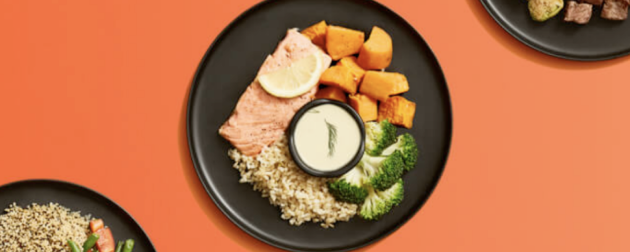
Yes, a pescatarian diet can be healthy when well-balanced and considered. It’s rich in omega-3 fatty acids (from fish), fibre, vitamins, and antioxidants (from plant foods), and is associated with lower risks of heart disease and type 2 diabetes. Like any diet, variety and balance are key to meeting all your nutritional needs. It is important to consult with your healthcare practitioner before deciding whether this diet is right for you.
There are many protein alternatives to meat sources. In a vegetarian diet we can obtain protein from sources such as eggs, dairy products, grains, beans, legumes, tofu, tempeh etc. If following a pescatarian diet, there is more choice including fish, crustaceans (prawns, lobster, crab) and molluscs/bivalves (clams, mussels, oysters, scallops, octopus, squid etc).
At this stage, there aren’t any dedicated pescatarian Hello Fresh boxes available in Australia. There are vegetarian options that may be suited to a pescatarian diet without of course the seafood element.
This is quite a common concern for those who consume a lot of seafood, or as the primary protein in their diets. Mercury is a heavy metal that may have consequential health problems with high consumptions especially in vulnerable populations such as children, babies, pregnancy and immunocompromised.
Some fish have higher amounts of mercury than others such as tuna and swordfish. If you have concerns about your mercury consumption, it’s important to check in with a trusted health professional. Some seafood that is low in mercury includes salmon, sardines, mackerel herring, squid, octopus and many more (Food Authority, 2021).
Yes, similar to a vegetarian’s diet where meat and poultry are avoided, animal products such as dairy and eggs are eaten.
Vegetarians avoid all meat products, poultry and seafood. Whereas a pescatarian avoids meat products and poultry – however still consumes seafood.
The Heart Foundation recommend eating fish 2–3 times per week, especially fatty fish like salmon, sardines, and mackerel. This ensures adequate intake of essential omega-3 fatty acids while limiting potential concerns around mercury and other environmental contaminants. Outside of these meals, those following a pescatarian diet can obtain protein from plant-based sources including legumes, tofu, tempeh and eggs.
Clark et al. (2018) “The Diet, Health, and Environment Trilemma”.
https://www.annualreviews.org/doi/abs/10.1146/annurev-environ-102017-025957
Food Authority (nd). “Mercury and fish”.
https://www.foodauthority.nsw.gov.au/consumer/life-events-and-food/pregnancy/mercury-and-fish
Goodfish (nd). “Australia’s Sustainable Seafood Guide – About Goodfish”.
https://goodfish.org.au/about-the-guide/
GoodFishBadFish (2021). “Sustainable Seafood”.
https://goodfishbadfish.com.au/
Tilman and Clark (2014). “Global diets link environmental sustainability and human health”.
https://www.nature.com/articles/nature13959?source=post_page—————————
Calder, P. C. (2017). Omega-3 fatty acids and inflammatory processes: from molecules to man. Biochemical Society Transactions, 45(5), 1105–1115.
Satija, A. et al. (2016). Plant-based diets and the risk of coronary heart disease. Journal of the American College of Cardiology, 70(4), 411–422.
Mozaffarian, D., & Rimm, E. B. (2006). Fish intake, contaminants, and human health. JAMA, 296(15), 1885–1899.
Tilman, D., & Clark, M. (2014). Global diets link environmental sustainability and human health. Nature, 515(7528), 518–522.