
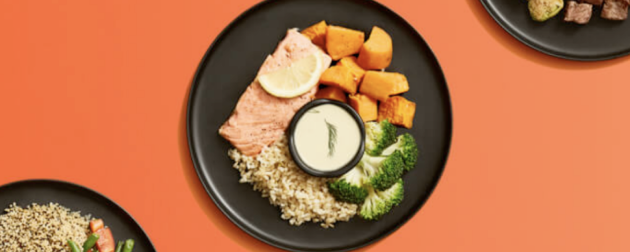
Any diet can be considered unhealthy. It’s important to consider the individual components of the diet that may cause a high-protein diet to be unhealthy. Depending on the specifics of the high-protein diet a consumer chooses there may be an encouragement to opt for high fat or a low carbohydrate load which can restrict essential nutrients and cause deficiencies or other health issues.
The focus should be around the inclusion of foods without total restriction, the quality and quantity of foods, as well as the suitability of the individual to a high-protein diet (Marta Cuenca-Sánchez 2015).
High protein diets may not be suitable for you, it is important to seek health advice with a trusted health professional before making any dietary changes.
Protein does a huge chunk of the work within every cell in our body. Amino acids that make up protein, are responsible for various parts of our body’s structures, elasticity, strength – all whilst repairing and building muscle (Berg, Tymoczko et al. 2002). Some hormones are proteins and can be responsible for becoming messengers feeding chemical notes to our cells and organs, whilst some proteins in the body are enzymes causing biochemical reactions (Cooper 2000, Cooper 2000). Protein assists in maintaining our body’s PH, provides us with energy, and some proteins even transport and store nutrients (A and T 2015, L. Lee Hamm 2015). Protein has copious amounts of roles in our body and is an essential component of maintaining healthy bodily function. With improper protein intake, our body can reflect deficiency signs leaving you feeling worse for wear and making the body’s job harder.
If you think you may not be consuming enough protein, it’s important to seek health advice from a trusted health professional before making any dietary changes.
- Nuts and seeds
- Eggs
- Cheeses such as cottage cheese
- Yoghurts such as Greek yoghurt
- Milk
- Grains such as quinoa
- Protein powders
- Legumes, beans, pulses
- Meat alternatives such as tofu and tempeh
- Vegetables such as broccoli, spinach, asparagus, artichokes, potatoes, sweet potatoes and brussels sprouts.
My Muscle Chef and MACRO meals are two more affordable options and allows you to purchase individual meals as well as bulk packs. My Muscle Chef starts at $10.95 per meals and MACRO meals come in at $9.90 per meal.
Core Powerfoods have meals valued at $9/ meal within a bulk pack purchase.
Eating a high-protein diet is not inherently bad for your kidneys if you are healthy. Research shows that for individuals with normal kidney function, high-protein diets—such as those often used for weight loss or muscle building—are generally safe and do not cause kidney damage. Protein metabolism increases the workload on the kidneys, but in healthy people, the kidneys adapt efficiently without harm.
However, for individuals with pre-existing kidney disease or impaired kidney function, high-protein intake may accelerate kidney damage due to the increased filtration demands. For these individuals, a moderate-protein diet is usually recommended to avoid further stress on the kidneys (Kalantar-Zadeh, et al., 2020). If you are considering a high protein diet, consult your health care professional first.
To get 40g of protein with every meal, you can combine high-protein foods from various sources. Here are some examples for achieving this goal:
- Lean Meats and Poultry: Include 150g of cooked chicken breast (43g protein) or turkey.
- Fish: A 150g serving of salmon or tuna provides about 40g of protein.
- Eggs and Dairy: Pair 3 large eggs (18g protein) with 100g of cottage cheese (12g protein) and a side of Greek yogurt (10g protein).
- Plant-Based Options: Combine 1 cup of cooked lentils (18g protein) with 1 cup of quinoa (8g protein) and a handful of roasted chickpeas (10g protein).
- Protein Supplements: Add a 30g scoop of whey protein (25g protein) to a smoothie with almond milk and peanut butter for an additional boost.
When planning meals, aim to balance protein sources with fiber-rich vegetables, healthy fats, and whole grains to ensure a well-rounded diet.
Hello Fresh has recipes on their weekly menu that contain ‘30g+ of protein.
A, H. and K. T (2015). “Mg, Zn and Cu Transport Proteins: A Brief Overview from Physiological and Molecular Perspectives.” Journal of nutritional science and vitaminology 61 Suppl.
https://pubmed.ncbi.nlm.nih.gov/26598820/
Berg, J. M., et al. (2002). “Protein Structure and Function.”
https://www.ncbi.nlm.nih.gov/books/NBK21177/
Cooper, G. M. (2000). “Signaling Molecules and Their Receptors.”
https://www.ncbi.nlm.nih.gov/books/NBK9924/
Cooper, G. M. (2000). “The Central Role of Enzymes as Biological Catalysts.”
https://www.ncbi.nlm.nih.gov/books/NBK9921/
J, H. (2006). “The role of albumin in fluid and electrolyte balance.” Journal of infusion nursing : the official publication of the Infusion Nurses Society 29(5).
https://pubmed.ncbi.nlm.nih.gov/17035887/
Koh, J. M. a. G. (2020). “Clinical Evidence and Mechanisms of High-Protein Diet-Induced Weight Loss.” J Obes Metab Syndr. 2020 Sep 30; 29(3): 166–173.
https://www.ncbi.nlm.nih.gov/pmc/articles/PMC7539343/
L. Lee Hamm, N. N. a. K. S. H.-S. (2015). “Acid-Base Homeostasis.” Clin J Am Soc Nephrol. 2015 Dec 7; 10(12): 2232–2242.
https://www.ncbi.nlm.nih.gov/pmc/articles/PMC4670772/
Marta Cuenca-Sánchez, D. N.-C. a. E. O.-P. (2015). “Controversies Surrounding High-Protein Diet Intake: Satiating Effect and Kidney and Bone Health.” Adv Nutr. 2015 May; 6(3): 260–266.
https://www.ncbi.nlm.nih.gov/pmc/articles/PMC4424780/
Samuel, D. H. P. a. V. T. (2014). “A high-protein diet for reducing body fat: mechanisms and possible caveats.” Nutr Metab (Lond). 2014; 11: 53.
https://www.ncbi.nlm.nih.gov/pmc/articles/PMC4258944/
Kamyar Kalantar-Zadeh, Holly M Kramer, Denis Fouque, High-protein diet is bad for kidney health: unleashing the taboo, Nephrology Dialysis Transplantation, Volume 35, Issue 1, January 2020, Pages 1–4, https://doi.org/10.1093/ndt/gfz216